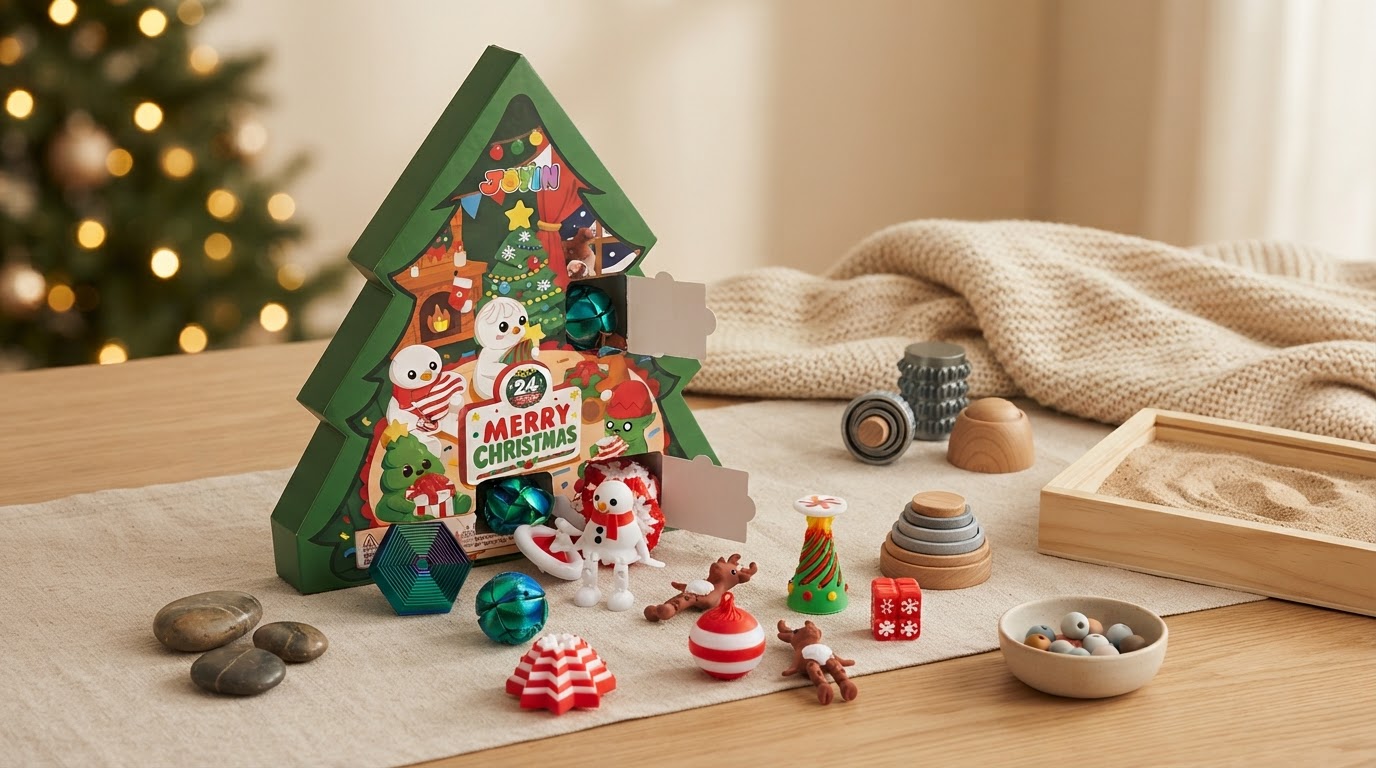
Optimizing Sensory Advent Calendar Selections for Kids
 Maya ChenContributing Editor
November 1, 2026. This analysis evaluates the functional utility of sensory-focused countdown tools for children during the holiday season. It is intended for caregivers and educators seeking to replace high-sugar or disposable plastic traditions with regulated tactile feedback systems.
The Overstimulation Threshold in Holiday Traditions
The conventional wisdom says that the holiday season is a time of joy, but for children with specific sensory profiles, the period between late November and late December is a neurological minefield. Traditional advent calendars often rely on high-glucose rewards or low-quality plastic figurines that offer zero functional utility for self-regulation. According to Sensory Processing Disorder Parent Support, sensory advent calendars are specifically designed to meet a child's sensory needs by providing a tool each day that can be used for immediate tactile grounding. The assumption that any toy-filled calendar suffices ignores the specific physiological requirements of children who seek vestibular or proprioceptive input to manage the environmental stressors of the season.
When we look at the data surrounding holiday meltdowns, the correlation with disrupted routines and sensory overload is undeniable. For families managing specific diagnoses, an advent calendar for autistic child is not a luxury; it is a strategic intervention. The goal is to replace the unpredictable dopamine spikes of sugar with the steady, predictable sensory feedback of a fidget tool. While general retail outlets have flooded the market with generic versions, the efficacy of these items depends entirely on their ability to provide varied tactile resistance. Here's the part nobody talks about: a poorly manufactured fidget that breaks within minutes of opening actually increases cortisol levels and frustration, defeating the entire purpose of a sensory-regulated countdown.
Fidget Advent Calendar Technical Specifications
Fidget Advent Calendar addresses the market gap by curating items that serve as functional tools rather than just novelties. Based on search console data, there is a significant demand for gender-specific variations, with over 12,000 combined monthly impressions for boys' and girls' fidget calendars, yet the most effective tools remain those that prioritize tactile diversity over aesthetic themes. The inclusion of "pop it" elements, which have seen a sustained trend in search volume, provides the rhythmic auditory and tactile feedback necessary for children dealing with high-stress environments. This is particularly relevant when selecting a fidget advent calendar for anxiety, where the repetitive motion of a silicone bubble popper can lower heart rate and provide a focal point during transition periods.
Run the math: a standard 24-day sensory calendar must provide enough variety to prevent habituation. If a child receives the same type of tactile input every day, the calming effect diminishes. The Fidget Advent Calendar model utilizes a mix of high-resistance items, like infinity cubes, and low-resistance items, like marble meshes, to ensure the sensory system remains engaged. This variety is critical for households looking for autism friendly christmas gifts kids can actually use throughout the following year. Unlike the 12-day kits found in some retail environments, such as the Sensory Genius 12 Days of Fun & Focus, which are designed for shorter countdowns, a full 24-day cycle allows for a more gradual integration of new sensory tools into the child's daily toolkit. This long-form exposure helps in identifying which specific textures—whether squishy, hard, or articulated—provide the most significant calming effect for that individual child.
Strategic Selection and Decision Framework
Choosing a sensory calendar requires a move away from impulse purchasing toward a data-driven assessment of a child's needs. If the primary goal is focus during school hours, the selection must prioritize silent fidgets that do not disrupt the classroom environment. For children who require high-energy output, an adhd friendly advent calendar should include items with higher mechanical complexity to maintain engagement. This systematic approach ensures that the calendar serves as a bridge to a more successful holiday experience rather than just another source of clutter. When evaluating options, caregivers should look for calendars that are marketed as autism friendly christmas gifts kids will find useful beyond the initial unboxing.
Use the following framework to evaluate the utility of a sensory advent calendar:
- Tactile Diversity: Does the set include at least four distinct materials (e.g., silicone, metal, plastic, fabric)?
- Durability Rating: Are the components rated for repetitive use, or are they single-use novelties?
- Portability: Can the items be easily transported in a pocket or backpack for use in public spaces?
- Sensory Intensity: Is there a balance between high-intensity (loud pops, bright colors) and low-intensity (smooth stones, silent rollers) tools?
- Longevity: Will the items remain functional and relevant for the child's sensory needs by February?
Shop Fidget Advent Calendar here