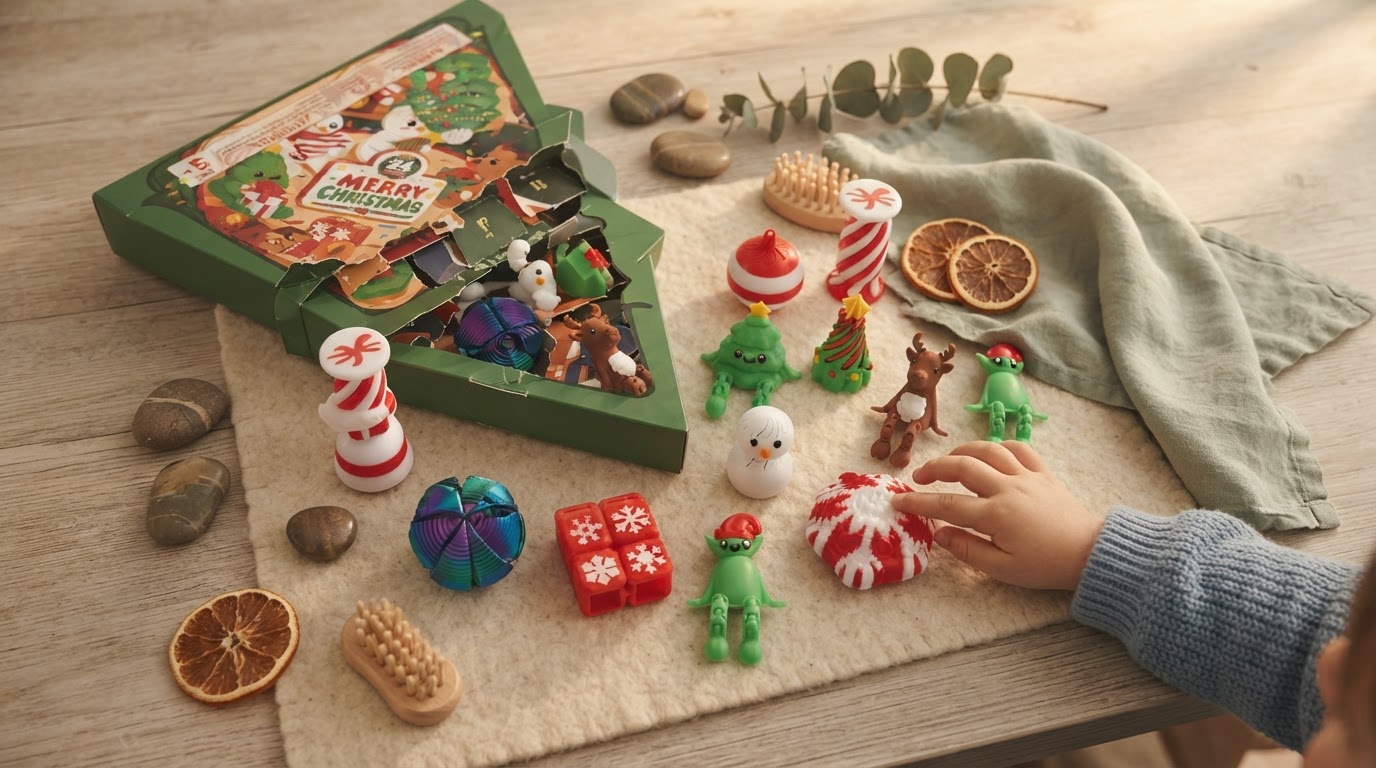
Fidget Advent Calendar for Autism-Friendly Gifting
 Sam VasquezBuying Guide Lead
November 5, 2026. This guide details how to select holiday gifts that respect the sensory profiles of neurodivergent children. It is written for parents and caregivers seeking structured, low-stress alternatives to traditional high-stimulation holiday activities.
Managing Sensory Overload During the Holidays
The holiday season often presents a significant challenge for families with autistic children due to the sheer volume of unpredictable sensory input. Bright lights, loud music, and the social pressure of traditional gift-opening can lead to overwhelm. According to National Autism Resources, selecting gifts like a Deluxe Jellyfish Lamp or a Super Sensory Kit can provide the necessary calming visual or tactile input that helps a child regulate their nervous system. When we look at the standard Christmas morning experience, the "big reveal" is often too much. For many, the transition into the holiday spirit needs to be gradual. I have seen families struggle when a child receives a complex toy that requires immediate social interaction or has loud electronic components. Instead, focusing on [sensory advent calendar for kids](/blog/sensory-advent-calendar-for-kids) allows for a predictable, daily ritual that builds positive associations without the peak-stress of a single morning. The goal is to provide a tool for regulation rather than just a distraction. If a child is already prone to sensory seeking, a gift that offers resistance or tactile feedback is far more valuable than a flashy gadget that might eventually cause a meltdown.
Why Fidget Advent Calendars Work for Neurodivergent Kids
A Fidget Advent Calendar serves as a functional bridge between the excitement of the season and the need for routine. Unlike a standard chocolate calendar, these provide durable tools that children can use throughout the day. Based on search data, parents are frequently looking for a fidget advent calendar for boys and girls that includes specific items like "pop its" because these provide immediate tactile feedback. Between these two options—a standard toy set or a daily advent format—I’d go with the advent format every time for an autistic child. The daily structure helps manage expectations and reduces the anxiety associated with "waiting for Christmas." It also provides a consistent way to build a sensory toolkit. If you are looking for an [advent calendar for autistic child](/blog/advent-calendar-for-autistic-child) needs, the variety of textures—silicone, plastic, and metal—found in these calendars ensures there is something for every sensory preference. Furthermore, using a [fidget advent calendar for anxiety](/blog/fidget-advent-calendar-for-anxiety) helps a child process the changes in their environment, such as decorations or house guests, by giving them a familiar object to focus on. For those also managing ADHD, a [adhd friendly advent calendar](/blog/adhd-friendly-advent-calendar) provides the dopamine hit of a new discovery each morning, which can help them stay focused on their morning routines before school. These calendars aren't just toys; they are self-regulation devices disguised as holiday treats.
Selecting the Right Sensory Gift Set
When you are deciding what to buy, you need to look at the specific sensory needs of your child. If you're on a budget, a mass-market pop-it calendar is a solid entry point, but be wary of low-quality plastics that might have an unpleasant chemical smell, as many autistic children are hypersensitive to odors. Skip this if your child has a history of mouthing small objects, as many fidgets contain small parts like bearings or magnets that pose a choking hazard. According to the Hopebridge Holiday Gift Guide, items like the Creativity for Kids Sensory Pack or LED color tiles are excellent for engagement, but they don't offer the daily pacing of an advent calendar. Here's what I'd actually buy: a high-quality Fidget Advent Calendar that includes a mix of "quiet" fidgets (like marble mesh) and "active" fidgets (like infinity cubes). This ensures the child has tools for different environments, such as a quiet classroom or a loud family dinner.
- Check for a variety of textures: Ensure the calendar includes both soft silicone and hard textures.
- Verify noise levels: Look for "silent" fidgets if the child needs to use them in quiet spaces.
- Prioritize durability: Avoid calendars that use thin, brittle plastics that break after one use.
- Assess the difficulty: Ensure the fidgets don't require complex fine motor skills that might frustrate the child.
- Look for portability: Small items that fit in a pocket are best for on-the-go regulation.
- Confirm safety standards: Ensure all items are BPA-free and non-toxic.